Money received is not always paid in full
An installment can arrive while part of the agreed payment is still outstanding.
When a client pays in parts, keep every installment connected. Record what you receive, review the payment history, and see exactly how much is still owed.
Start Free Trial14-day free trial. No credit card required.
A clear record of your payments. Whatisdue does not invoice clients or collect money on your behalf.
See the original amount, every installment, and the unpaid remainder together.
An installment can arrive while part of the agreed payment is still outstanding.
Keep each received amount connected to the original payment instead of piecing together separate notes.
A partial payment reduces what is owed. The agreed due date tells you whether the remainder is overdue.
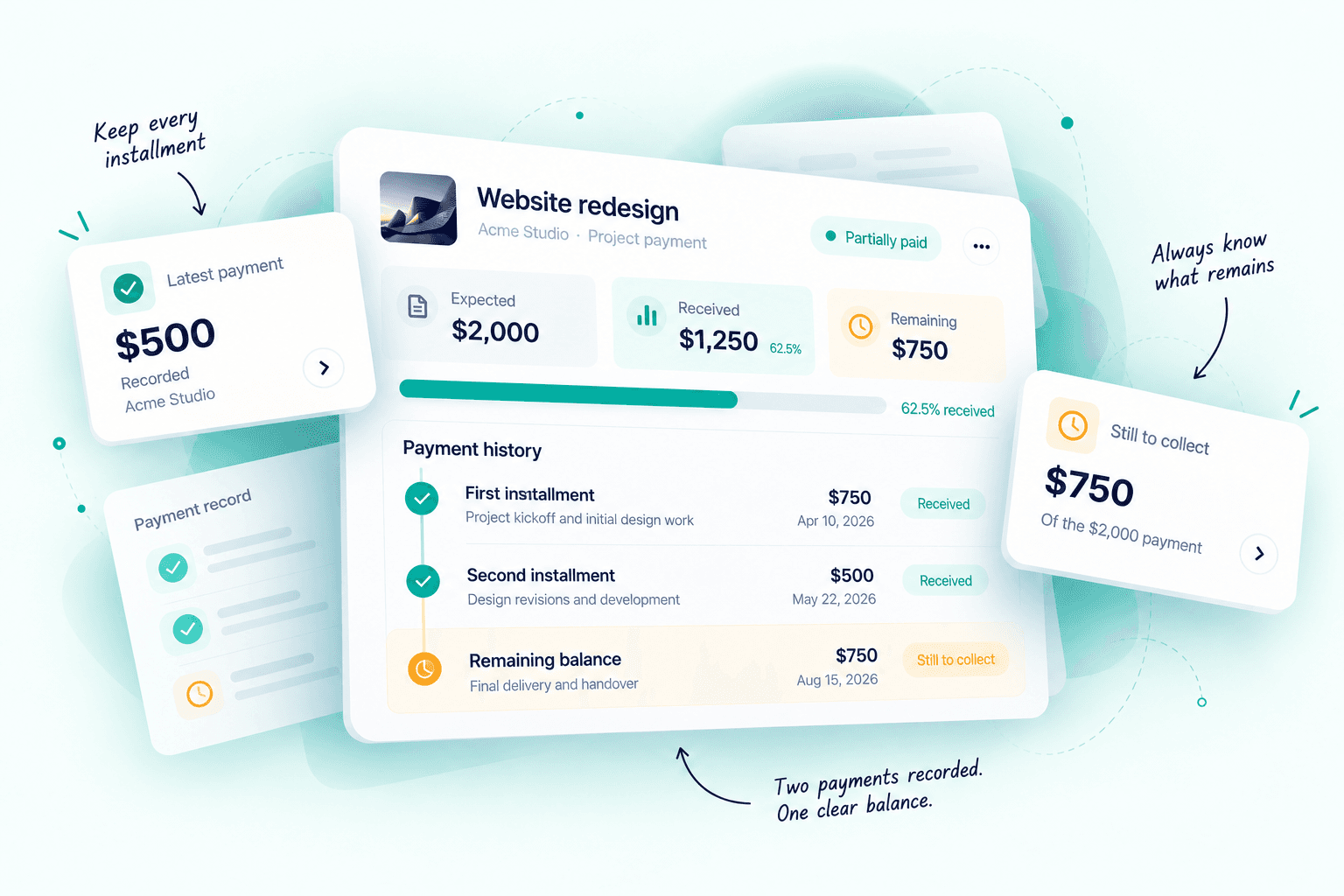
A client owes $2,000 and pays $750, then $500. Whatisdue keeps the $1,250 received and the $750 remaining easy to follow.
Website redesign · Two installments recorded against one payment
| Payment history | Amount received | Total received | Balance after payment |
|---|---|---|---|
| First installmentReceived | $750 | $750 | $1,250 |
| Second installmentReceived | $500 | $1,250 | $750 |
$750 still to collect against this payment.Both installments stay in the history. Once the remaining $750 is received and recorded, the $2,000 payment is fully paid.
Follow received amounts and remaining balances without losing the original payment context.
Keep each amount received connected to the payment it belongs to.
Compare the expected amount with the sum of recorded client payments.
Review the remaining balance alongside the agreed payment schedule.
Find the related client and project when reviewing or following up on a payment.
Start with the expected amount, then keep the record current as each installment arrives.
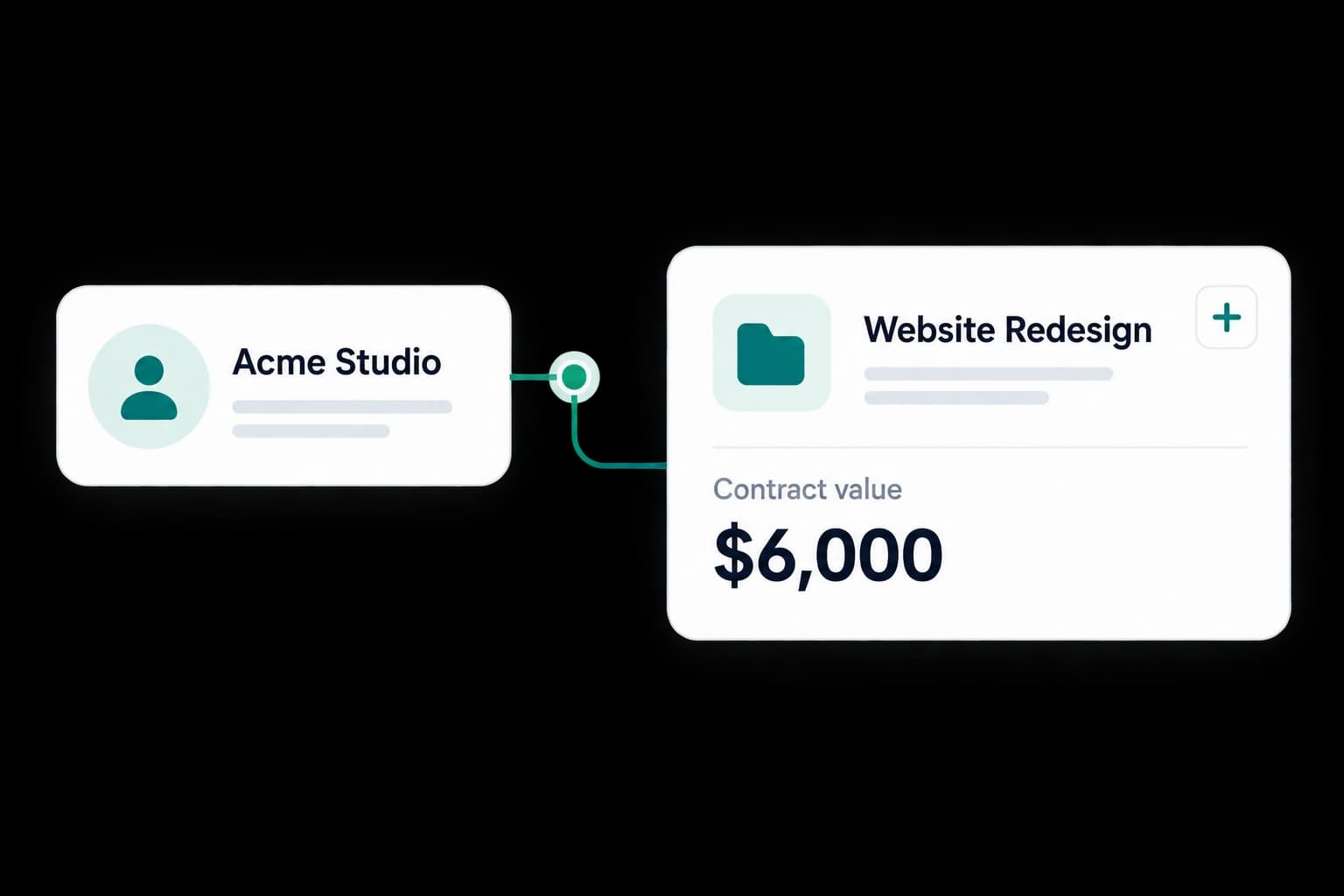
Add the client and project, then create the payment amount you agreed to receive.
Enter each received amount against that payment, including any fees deducted.
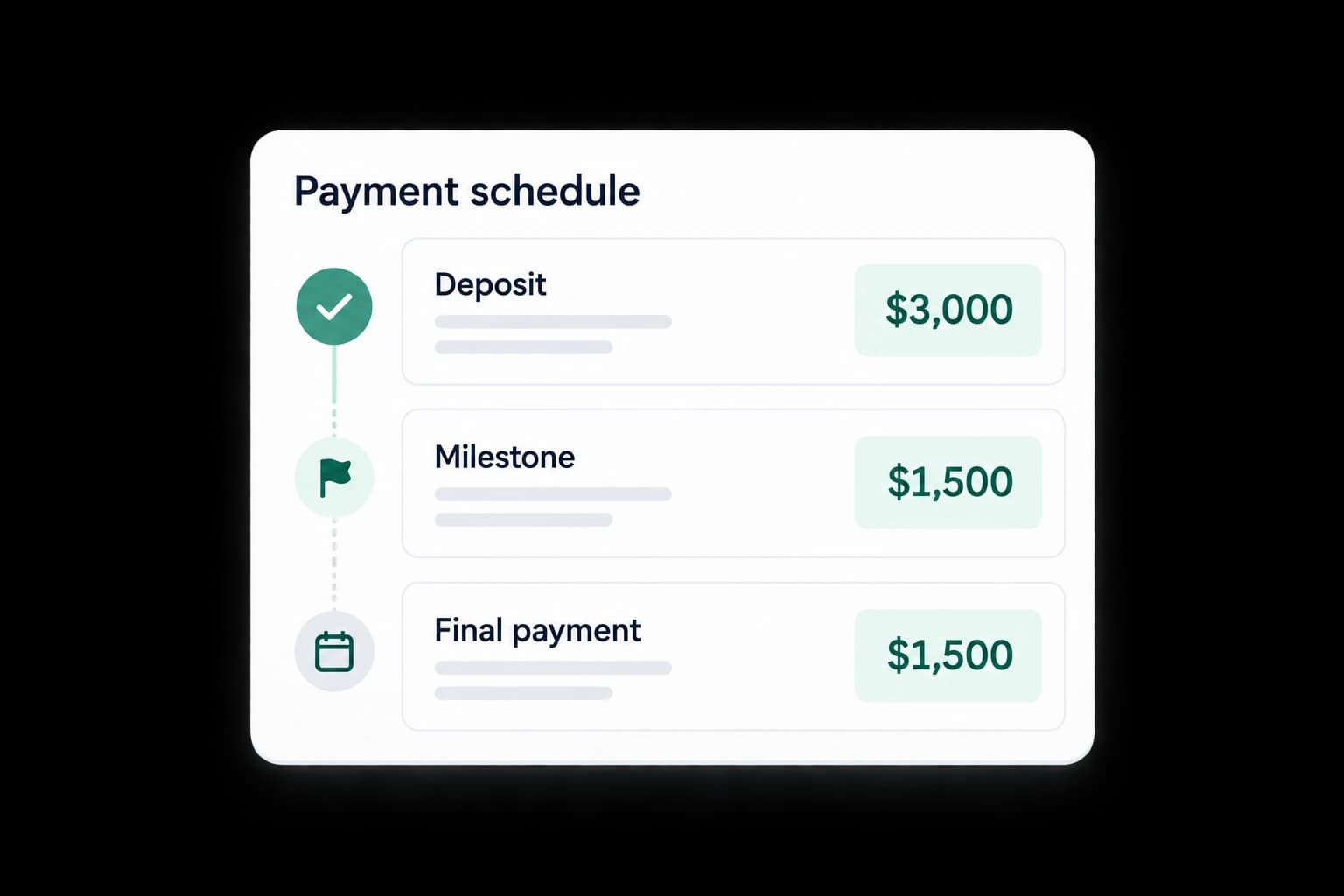
See the total received and remaining balance together with the payment's agreed timing.
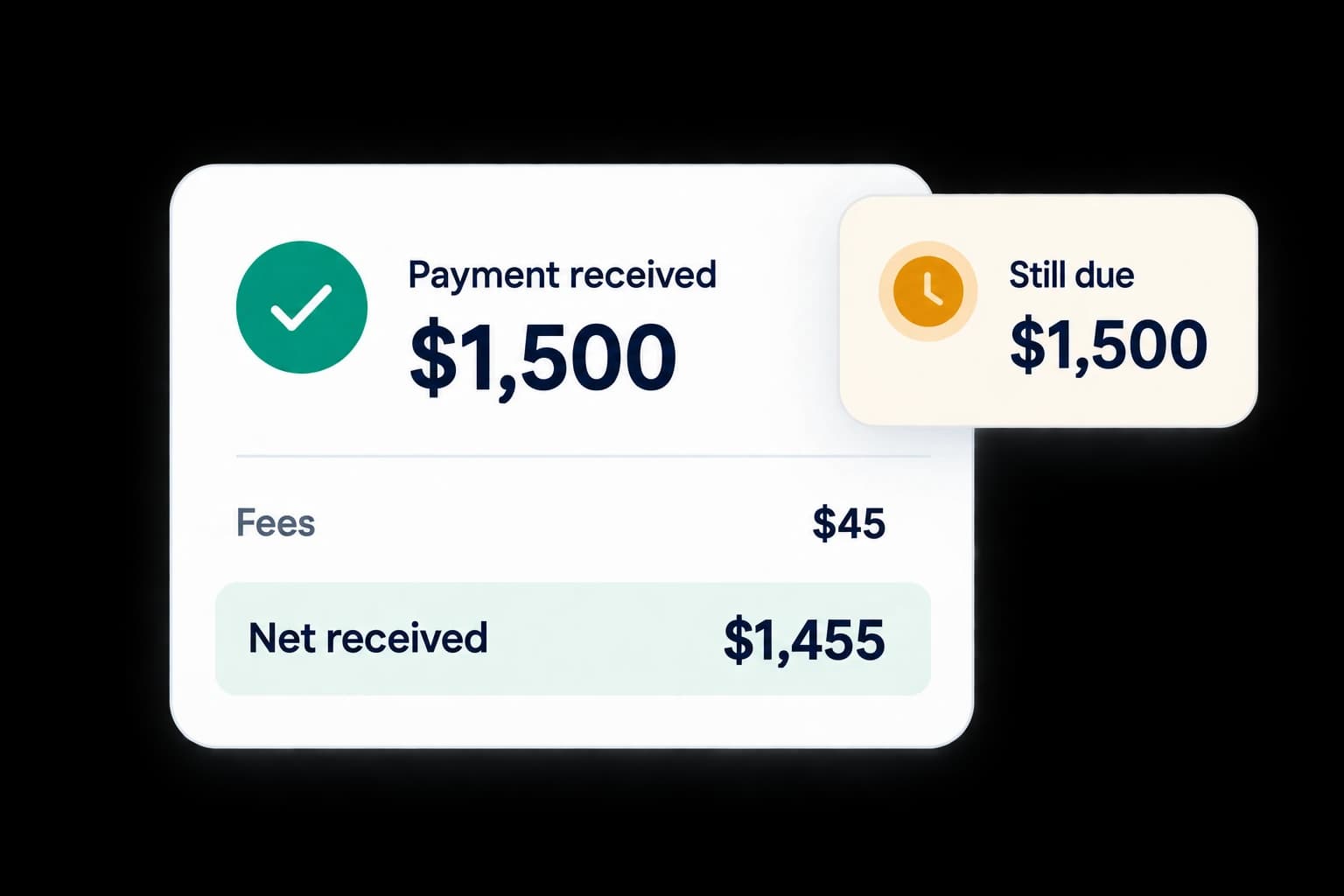
Processing and platform fees can reduce the amount that reaches your account. Record those deductions alongside the payment to keep both figures clear.
A $1,000 payment with $30 in fees means $970 net received. The fees do not add $30 to the client's remaining balance.
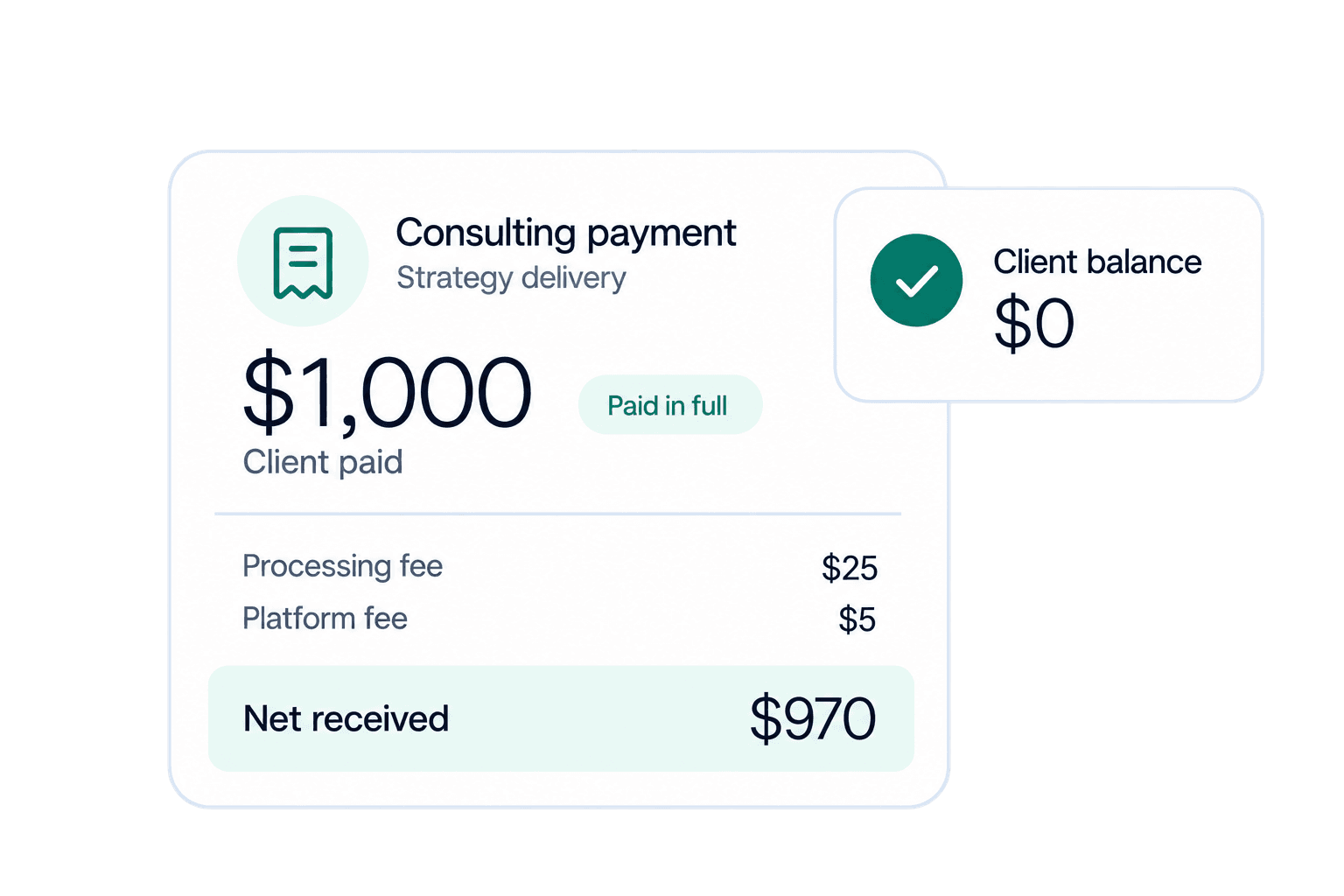
Keep partial payments tied to clients, projects, and agreed payment schedules.
Keep multiple installments connected to one expected payment.
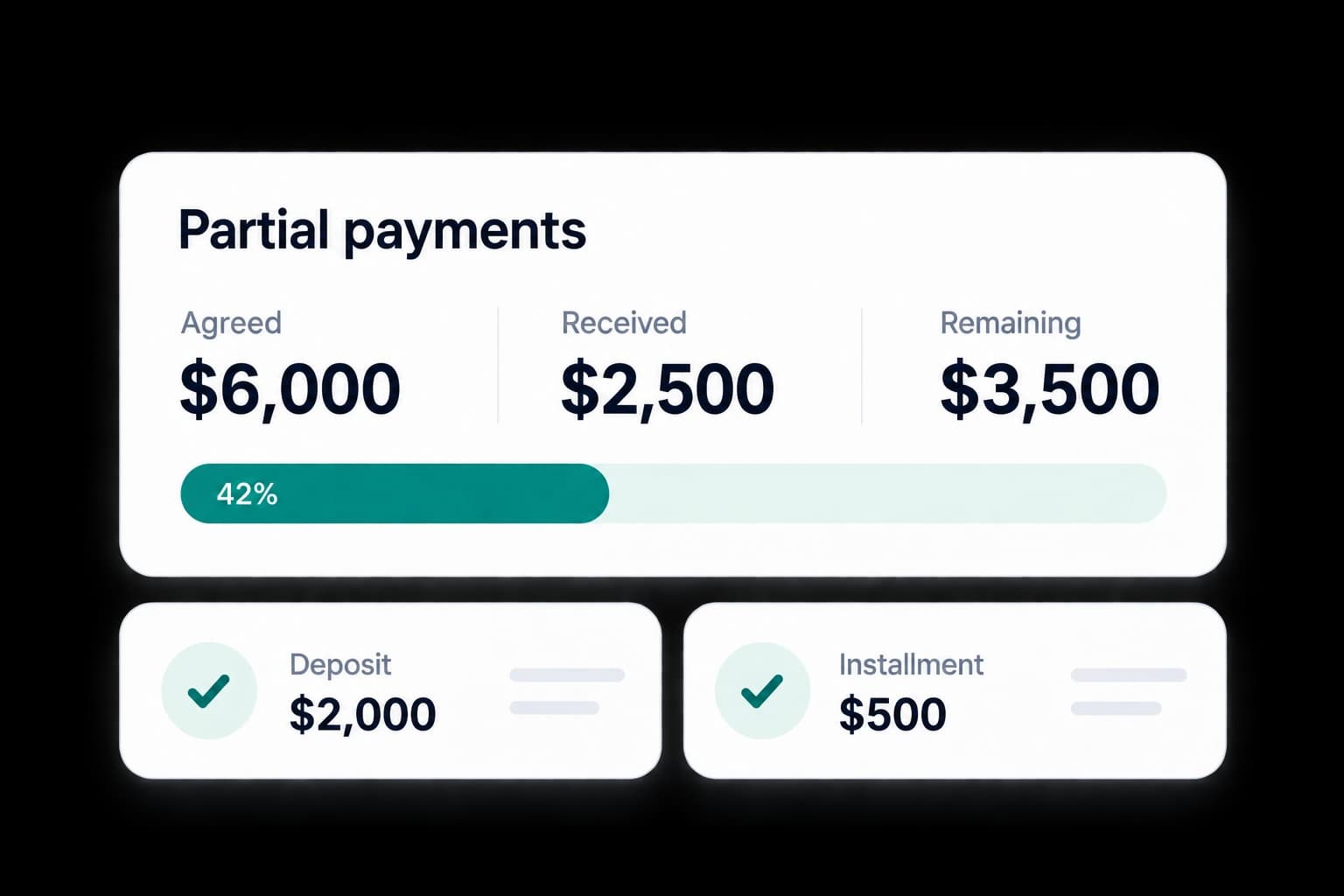
Understand how recorded payments contribute to the project's overall collection progress.
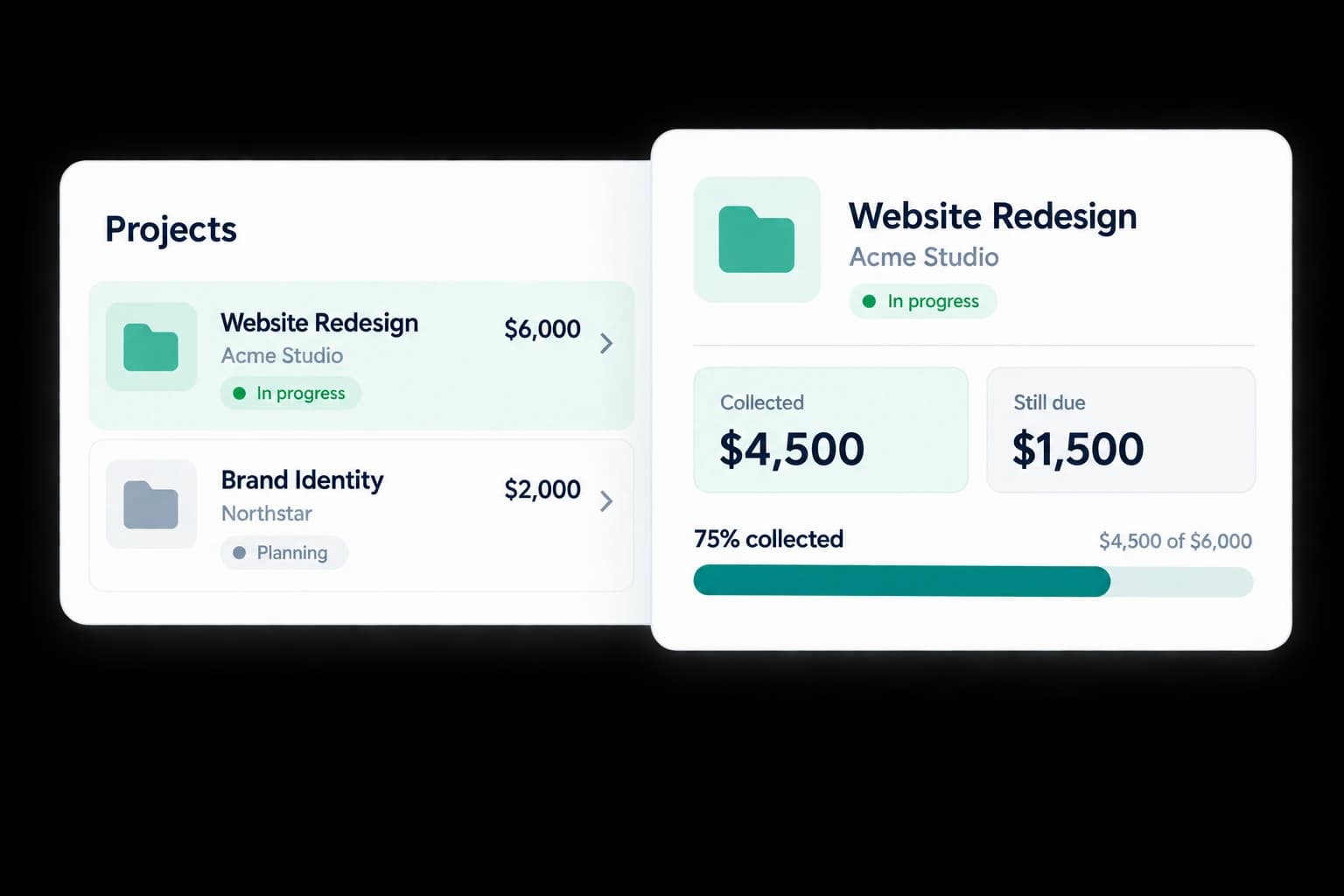
Keep installments in the context of deposits, project milestones, and final payments.
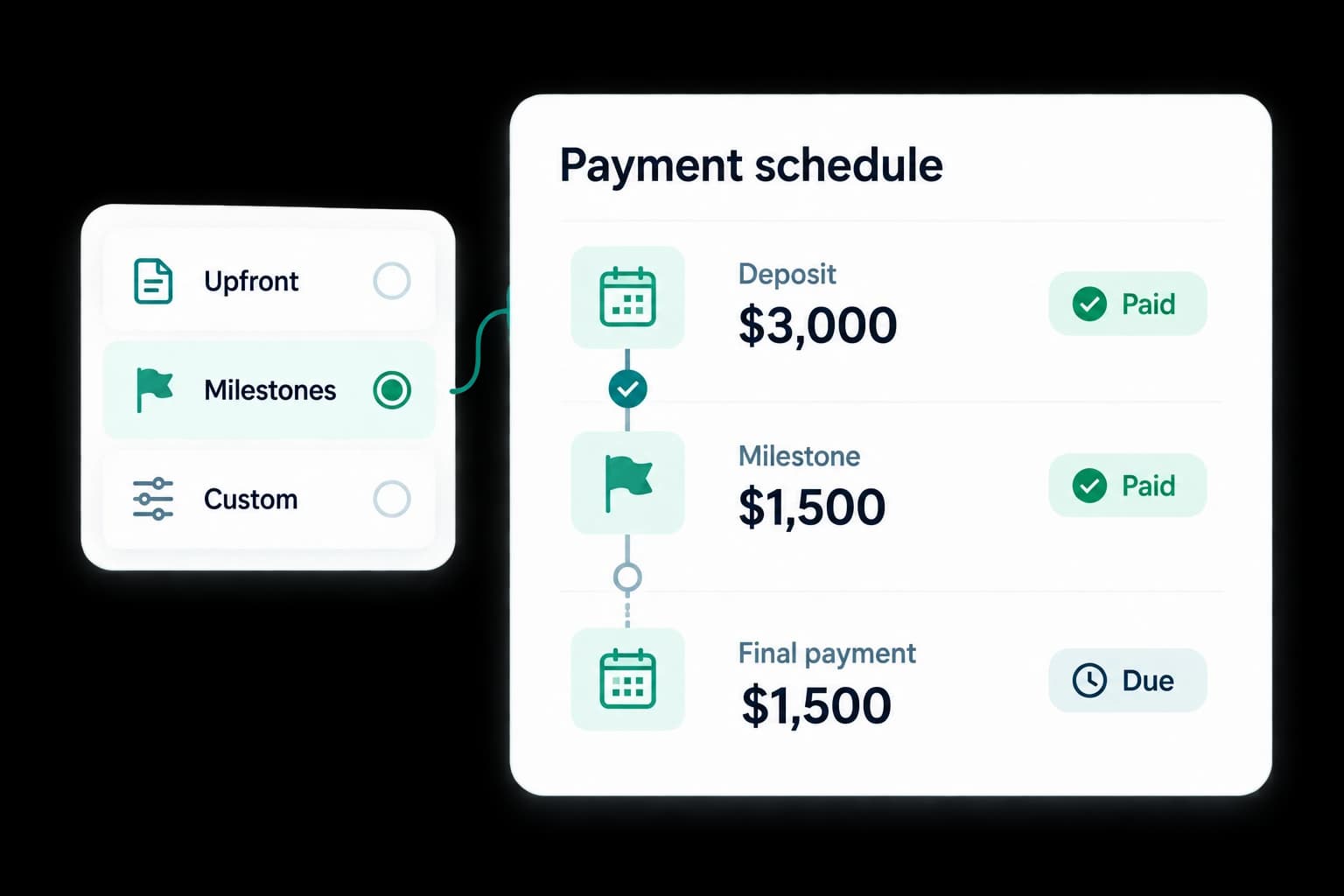
See what remains unpaid and which scheduled balances have passed their due dates.
Explore payment tracking for your type of client work.
Unlimited clients and projects, with the tools to track payments from first deposit to final balance.
$4.99/month
Everything you need to keep client payments organized and know what’s still due.
No credit card required
Understand installments, remaining balances, fees, and payment timing.
Start Free Trial Get Started
Start your free trial and see what has been received, what remains, and the payment history behind each balance.
Start Free Trial14-day free trial. No credit card required.